
Websites Designed to Convert, Not Just to Load
Anviam is a professional web design company that pairs UI/UX design with clean, custom code, so the site looks right, works on every device, and is structured for search from the day it ships.
Design, Code and SEO Structure Aren't Separate Jobs
A lot of website projects go design first, build second, SEO whenever there's time left. That order is why so many sites look fine and still underperform: slow pages, buried headings, forms nobody finishes. As a custom website development company, we plan the visual design, the underlying markup and the page structure at the same time, so none of them fight each other later.
The site you're looking at right now is built the same way: semantic HTML, accessible navigation, and a structure search engines and AI crawlers can actually parse. It's not a mockup of what we do; it's a running example of it.
Web Design & Website Development Services
From a first design file to a live, maintained site, scoped around what your business actually needs, not a fixed package.
Custom Website Design & Development
Fully custom sites built to your brand and content, not a stretched template. Designed, coded and tested end to end.
UI/UX Design
Wireframes, user flows and high-fidelity UI as one of our core ui ux design services, so decisions get made before development starts, not during it.
Website Redesign
Website redesign services that modernize an outdated site while protecting the rankings, content and traffic it already has.
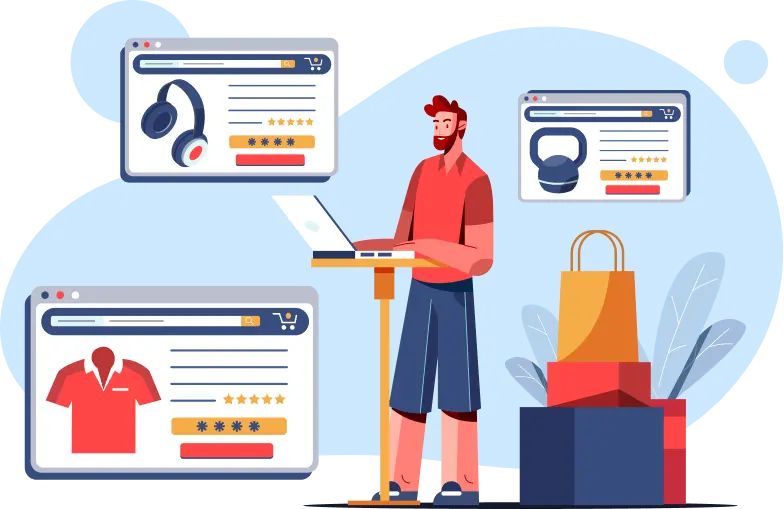
Ecommerce Website Development
As an ecommerce website development company, we build storefronts on Shopify or custom stacks, covering catalog, checkout and payments.
Landing Page & Conversion Design
Focused, fast-loading landing pages built around one goal per page and tested against real conversion data.
Website Maintenance & Support
Ongoing updates, security patches and small content changes after launch, so the site keeps working the way it did on day one.
Designed and Built on Tools You Can Actually Verify
Websites Built for the Business Behind Them
Corporate & Service Business Sites
Sites that explain what you do, build trust fast, and make it easy to get in touch or request a quote.
Ecommerce Storefronts
Product catalogs, checkout flows and payment integrations built for browsing on a phone as much as a desktop.
SaaS Marketing Sites
Marketing sites that carry pricing, feature and comparison pages without slowing down the product they're selling.
Healthcare Practice Websites
Practice and clinic sites with clear service pages, appointment paths and the accessibility a healthcare audience needs.
Real Estate & Listings Sites
Listing-heavy sites with search, filtering and image-led layouts that stay fast even with hundreds of properties.
Nonprofit & Education Sites
Content-first sites built around donations, admissions or program information, with straightforward content updates.
From First Sketch to a Live, Indexed Site
Discovery
We map your audience, goals and content before any design work starts.
Wireframes & UX
Page structure and user flows are laid out first, so navigation and content hierarchy make sense.
Visual Design
Full UI design in Figma covering brand, layout and interaction detail, reviewed before development begins.
Build
The approved design is coded and tested across browsers, devices and screen sizes.
Launch & SEO Handoff
We launch with on-page SEO, analytics and search console set up, and hand off a site you can actually manage.
Common Questions About Web Design & Development
Do you design in Figma before building?
Yes. Every project starts with wireframes and high-fidelity mockups in Figma, so you can review layout, content hierarchy and visual design before a single line of code is written.
Can you redesign our existing website without losing our SEO rankings?
Yes. A website redesign starts with an audit of your existing URLs, rankings and traffic. We carry forward what's working, like page structure, key content and backlinks, and set up redirects so a redesign improves your site without resetting your SEO.
Do you build on WordPress, Shopify or custom code?
It depends on the project. We build on WordPress and Shopify when a client needs an easy-to-manage CMS or a proven ecommerce platform, and we build fully custom in HTML, CSS and JavaScript, or a framework, when performance or a specific feature set calls for it.
Is accessibility included in every design?
Yes. We design and build to WCAG accessibility guidelines by default, covering proper contrast, keyboard navigation, semantic markup and alt text, rather than treating it as an add-on.
How long does a typical website project take?
A standard 5 to 10 page business website usually takes 4 to 6 weeks from discovery to launch. Ecommerce builds and larger custom platforms typically run 8 to 14 weeks depending on catalog size and integrations.
Do you offer ongoing maintenance after launch?
Yes. After launch we offer maintenance retainers that cover updates, security patches, performance monitoring and small content changes, so the site doesn't become someone's back-burner problem.