
Custom AI Agents That Do the Work, Not Just Answer Questions
AI agent development is the process of building autonomous software systems that can plan, reason, and execute multi-step tasks without continuous human input. Anviam builds AI agents on LangChain, LlamaIndex, and custom orchestration frameworks for enterprise workflows that run unattended in production.
Anviam designs and builds agentic AI systems that plan, reason, call tools and take action across your existing software, from a single support agent to a coordinated multi-agent workforce.
Not a Chatbot. A System That Actually Finishes the Task.
Most "AI features" stop at generating a reply. An AI agent goes further: it breaks a goal into steps, decides which tool or API to call at each step, checks its own output, and only stops once the task is actually done: booking the appointment, updating the record, or escalating to a human when it's genuinely stuck.
As a dedicated agentic ai development services provider, we design these systems around your real operating constraints: data privacy, existing software, and how much autonomy you're comfortable giving the agent on day one versus month three.
Agentic AI Development Services
Every engagement is scoped as custom ai agent development, not a templated bot. We build around the tools, data and guardrails your business actually needs.
Autonomous AI Agents
Single-purpose agents that own a full task end-to-end (triaging tickets, qualifying leads or reconciling data) with defined escalation rules.
Multi-Agent Systems
Coordinated teams of specialized agents (a planner, a researcher, an executor) that hand off work the way a human team would.
RAG-Powered Agents
Retrieval-augmented agents that ground every answer in your own documents, tickets or knowledge base instead of the model's general training data.
AI Voice Agents
Voice-driven agents for inbound support, appointment scheduling and outbound follow-ups, integrated with your telephony stack.
Workflow Automation Agents
Agents built on n8n and Zapier that trigger, monitor and self-correct multi-step business processes across your existing tools.
Enterprise AI Copilots
Internal copilots embedded in your product or intranet that give employees a single, trustworthy interface into company data.
Built on the Same Stack Powering Production AI Today
AI Agents for Business Automation, by Function
Customer Support
Agents that resolve tier-1 tickets, pull order history and hand off complex cases with full context attached.
Healthcare Operations
Ambient AI medical scribes and intake agents that reduce clinician documentation time inside HIPAA-compliant workflows.
Sales & RevOps
Agents that qualify inbound leads, enrich CRM records and schedule meetings without a rep touching the keyboard.
IT & DevOps
Agents that triage alerts, correlate logs and open remediation tickets before an incident becomes an outage.
Finance Back-Office
Agents that reconcile invoices, flag anomalies and prepare month-end reports for human sign-off.
Operations & Logistics
Agents that monitor shipments, re-route around delays and keep customers updated automatically.
What Product Leaders Say About Our AI Engineering
Direct quotes from client teams deploying autonomous AI agents and agentic workflows built by Anviam.
"Anviam built a multi-agent RAG workflow on LangChain and vector databases that autonomously triages inbound technical support cases, cutting our resolution latency by 65% while keeping human oversight in place."
SaaS Product Engineering Lead
Enterprise AI Client Partner"The ambient AI scribe and intake agent built by Anviam streamlined clinical documentation inside our HIPAA-compliant EHR environment, saving hours of manual data entry every shift."
Healthcare Systems Lead
Health Tech OperationsAudited & Approved by Anviam AI Engineering Leadership
All agentic AI design patterns, evaluation harnesses and prompt-guardrail specifications on this page are reviewed by Anviam's CMMI Level 3 appraised AI Engineering Leadership and ISO 27001 Security Auditors. We enforce strict data privacy, HIPAA compliance, and evaluation metrics before deploying any agent to production.
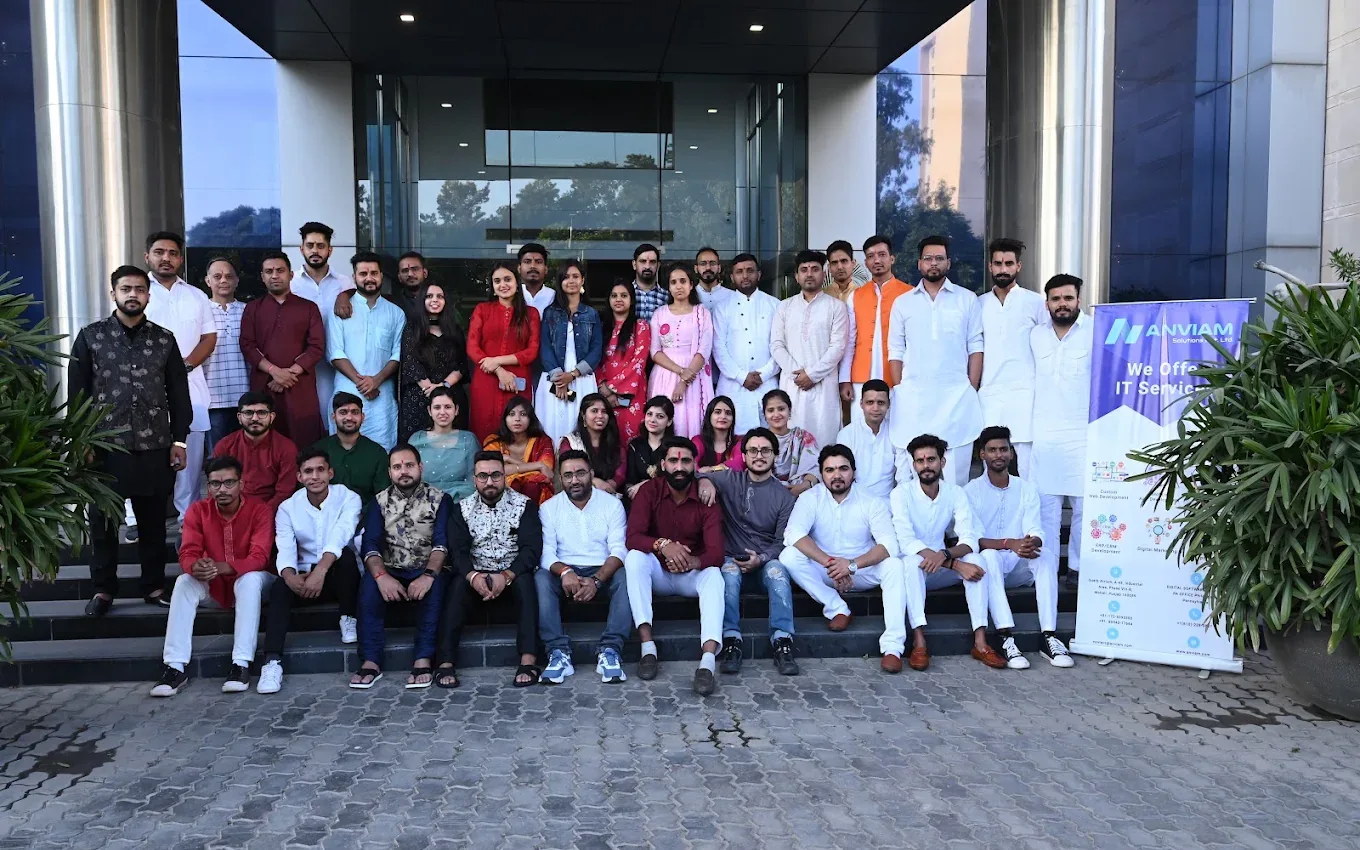
Ankur — Founder & CEO, Lead AI Solutions Architect
CMMI Level 3 Appraised Engineering Executive and ISO 27001 Lead Auditor overseeing 500+ enterprise software and AI agent deployments worldwide. Connect on LinkedIn
From Use Case to Production Agent
Discover the Use Case
We identify the highest-value, lowest-risk task to automate first.
Design Agent Architecture
Tools, data sources and guardrails are mapped before any prompting begins.
Build & Evaluate
We build against real test cases and measure accuracy, not just demo it.
Integrate & Pilot
The agent runs alongside your team on live data before full rollout.
Deploy & Monitor
Production deployment with logging, guardrails and continuous tuning.
Common Questions About AI Agent Development
What is agentic AI, and how is it different from a chatbot?
A chatbot answers questions inside a conversation. An AI agent goes further. It can plan a sequence of steps, call tools or APIs, check its own output, and take action inside your systems, such as updating a CRM record or triggering a workflow, with little to no human intervention.
How long does it take to build a custom AI agent?
A focused single-purpose agent, such as an internal support assistant, typically takes 4 to 8 weeks from discovery to production. Multi-agent systems that orchestrate several workflows usually take 10 to 16 weeks, depending on integration complexity.
Which LLMs and frameworks do you build AI agents with?
We build on OpenAI GPT, Anthropic Claude and Google Gemini models, orchestrated with LangChain, LlamaIndex or custom agent frameworks, with vector databases for retrieval and tools such as n8n for workflow automation.
Can AI agents integrate with our existing CRM, ERP or EHR systems?
Yes. Most of our agentic AI projects connect directly to existing business systems through APIs, including Salesforce, HubSpot, Zoho, SAP and HIPAA-compliant EHR platforms, so the agent acts on real data instead of a copy of it.
Do you offer ongoing support after the AI agent is deployed?
Yes. Every agentic AI engagement includes a post-launch monitoring period, and we offer ongoing retainers for prompt tuning, model updates and new tool integrations as your workflows evolve.
Can we hire agentic AI developers on a dedicated basis?
Yes. Beyond fixed-scope projects, you can hire agentic AI developers from Anviam as a dedicated, embedded extension of your team on a monthly staff-augmentation model.