
TextGrid.
Communications SaaS,
built by Anviam.
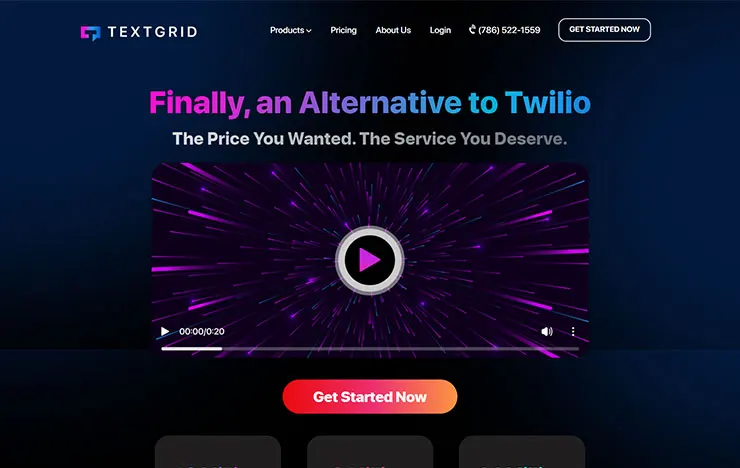
A business communications platform connecting SMS, voice, email and more. Anviam developed its software architecture, database, frontend and backend.
One product.
Connected layers.
Conceptual scope illustration · Not a product screenshot
From Software Foundations to a Working SaaS Product
- The productA programmable communications platform positioned as an alternative to Twilio.
- Anviam's contributionArchitecture, database design and full-stack application development.
- The business purposeHelp organisations connect customer communications with their own software and workflows.
Business Communications, Connected to Everyday Work
TextGrid provides programmable communications services for organisations that need customer interactions to work within their existing software.
The product is relevant to developers integrating communications, product teams defining customer journeys and operations teams supporting those interactions. Business buyers need to assess integration effort, service suitability and ongoing cost alongside functionality.
Developers need clear integration paths. Product teams need complete customer journeys. Operations teams need understandable outcomes. Together, those needs shape a communications application that fits the wider business process.
Channels in the public offering
- SMS messaging
- MMS and multimedia
- Voice
- Telephone numbers
- Number lookup
- GoHighLevel integration
One Team Across the Core Application Layers
Anviam's responsibility covered the core layers of the SaaS application, from the experience users interact with to the application services behind it.
Software Architecture
Established the application's technical structure and the relationships between its components.
Database Design
Defined how application information would be organised and related.
Frontend Development
Delivered the customer-facing application interface.
Backend Development
Delivered the application functionality supporting that interface.
More Than Sending a Message
Practical needs suggested by the platform's purpose and public functionality. These are product-level challenges, not a reconstruction of the original client brief.
Bringing Communications Into Business Workflows
Customer communication often begins with an event elsewhere: a booking, account action, service update or request for information.
Teams need to define the trigger, recipient, message and response path together. Otherwise, a technically successful send may still leave the business task incomplete.
Evaluating Integration and Migration Effort
For businesses with an existing provider, changing services affects more than the destination of an API request.
TextGrid promotes a simplified migration approach. A production migration should still be evaluated against real authentication, request formats, sender configuration and response handling.
Understanding Communication Outcomes
A request being accepted is different from a message reaching its destination or a call completing.
Clear outcome information helps users decide whether to wait, correct information or investigate a failure, and gives support teams a better basis for explaining an issue.
Navigating Setup and Service Requirements
Account creation does not necessarily mean a communication workflow is ready for production.
TextGrid offers assistance with 10DLC campaign registration, helping customers understand the information and steps required for applicable messaging activity.
Communication Capabilities With a Business Purpose
SMS With Delivery Visibility
Connect text messaging with application events and make delivery outcomes easier to understand.
- Delivery receipts
- Error information
- Opt-out handling
Multimedia and Voice
Support interactions that need images, multimedia or a telephone response.
- MMS multimedia messaging
- Text-to-speech and keypad input
- Call-state, timeout and fallback handling
Number Lookup and Provisioning
Evaluate contact information and provision numbers for business communication workflows.
- Lookup informs routing or validation
- Provisioned numbers with clear ownership
Email Within Application Journeys
Support account recovery, transactional messages and campaign communication, treated as distinct journeys.
- Password-reset messages
- Campaigns and delivery information
Connecting Existing Business Tools
Bring communications into an existing GoHighLevel workflow, with less movement between separate tools.
- Publicly advertised GoHighLevel integration
From Evaluation to Ongoing Use
The public-facing journey offers two starting points: account registration and assisted enquiry. Product and pricing pages support evaluation before either route.
Evaluate
Review product fit, integration needs and pricing.
Start
Create an account or take the assisted enquiry route.
Set up
Resolve applicable configuration and registration requirements.
Integrate
Connect the communication task to the business workflow.
Test
Check the interaction and its exception paths.
Operate
Monitor outcomes and manage ongoing use.
Steps after sign-up are a product journey model, not a claim that every authenticated step was inspected.
The Engineering Behind the Experience
The confirmed delivery scope spans architecture, database design, frontend and backend. These are the engineering questions relevant to this kind of product, not claims about a verified internal implementation.
Account ownership and access
A communications application needs to associate resources and operations with the correct account. The backend must enforce access rules rather than relying on the interface to hide restricted information, and database relationships should make ownership explicit so retrieval and updates can be checked consistently.
State management and data integrity
Communication operations may receive updates after the initiating request has finished. A suitable design distinguishes current state from historical activity and preserves enough context to investigate failures and reconcile uncertain outcomes.
Retries and external dependencies
An interrupted request can leave an application uncertain whether an operation succeeded, and blind retries can create duplicate customer interactions. Engineering decisions should address timeouts, duplicate detection and reconciliation.
Frontend clarity and backend consistency
Users experience backend decisions through interface behaviour. Accurate validation, meaningful status labels and recoverable errors make complex processes understandable, and the interface and backend must agree on what an operation means and what counts as completion.
Maintainability and data protection
Communications software handles contact information, credentials and potentially sensitive content. Relevant requirements include controlled access, appropriate logging, retention decisions and testable integration boundaries.
What the Delivery Makes Possible
Anviam delivered the core application layers of TextGrid: software architecture, database design, frontend and backend functionality.
The expected value is more connected communication workflows and a foundation for extending functionality. These are reasoned benefits; no improvement in revenue, uptime or efficiency is claimed without measurement.
A Connected SaaS Application, From Interface to Underlying Logic
The delivery brings product behaviour, application data and the user-facing experience into one software product.
Why Anviam for Your SaaS Project?
TextGrid is a concrete example of Anviam's involvement across the core disciplines of SaaS development.
Connected Decisions
Architecture, data and interface behaviour considered together within one development engagement.
Full-Stack Scope
TextGrid's confirmed scope covers the application foundation, database, frontend and backend.
A Relevant Starting Point
Use this experience to discuss your own users, workflows, integrations and product requirements.
Measurement and Sources
How product effectiveness could be measured
These are suggested KPIs for a future evaluation, not measured project results. Establish consistent definitions, eligible cohorts and reliable baselines before assessing change.
| Evaluation area | Useful measure |
|---|---|
| Initial adoption | Time from registration to first successful test interaction |
| Workflow usability | Completion rate for a defined setup task |
| Operational visibility | Proportion of eligible operations with a known final outcome |
| Application performance | Error rate and response-time distribution |
| Data consistency | Duplicate or unreconciled operation count |
| Support effectiveness | Cases per active account, grouped by cause |
| Sustained use | Continued activity among activated account cohorts |
Sources and evidence
Anviam's architecture, database, frontend and backend responsibilities were confirmed by project information supplied for this case study. Product descriptions are grounded in the public sources below. General engineering considerations and expected benefits are analysis, not verified implementation details. No measured improvements are claimed.
- TextGrid product and migration
- 10DLC assistance
- SMS API
- MMS API
- Voice API
- Number lookup
- Phone numbers
- Email API
- GoHighLevel integration
- Privacy policy
No authenticated dashboard, source code or API delivery test was inspected.